

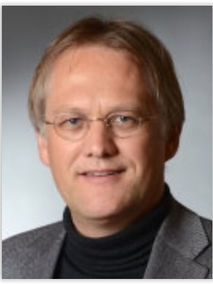
Prof. Dr. med. Thomas Kuner
Institutsleitung
(Institut für Anatomie und Zellbiologie)
Adresse
Im Neuenheimer Feld 30769120 Heidelberg
Gebäude 307
Zimmernummer 206
Curriculum Vitae
Personal Data
| Title | Prof. Dr. med. (MD) |
| First name | THOMAS |
| Name | KUNER |
| Current position | Institute Director and Full (W3) Professor of Functional Neuranatomy |
| Current institution(s)/site(s), country | Institute for Anatomy and Cell Biology, Medical Faculty of Heidelberg University, Heidelberg, Germany |
| ORCID-ID | 0000-0003-1896-9031 |
Qualifications and Career
| Stages | Periods and Details |
| Degree programme | 04/1988 – 09/1998, Medical studies, Heidelberg University, Germany |
| Doctorate | 1992 – 1998, Molecular Neurobiology, Center for Molecular Biology Heidelberg (ZMBH), Heidelberg, Germany (Prof. Dr. Peter H. Seeburg) |
Stages of academic/professional career | Academic Career
Since 06/2022, Director of the Institute for Anatomy and Cell Biology, Heidelberg University, Heidelberg, Germany
Since 08/2012, Professor and Director, Department of Functional Neuroanatomy, Institute for Anatomy and Cell Biology, Heidelberg University, Heidelberg, Germany
08/2006 – 07/2012, Professor (W3) of Ultrastructural Research at the Department of Medical Cell Biology, Institute for Anatomy and Cell Biology
2003, Habilitation in Physiology, Title “ Ionotrope Glutamatrezeptoren: Strukturelle Grundlagen und biophysikalische Mechanismen der Ionenpermeation”, (Prof. Dr. Bert Sakmann)
11/2000 – 07/2006, Group leader at the Department of Cell Physiology, Max Planck Institute for Medical Research, Heidelberg
08/1998 – 010/2000, Postdoc at the Department of Neurobiology, Duke University Medical Center, Durham, and Marine Biologicial Laboratory, Woods Hole, USA (Prof. Dr. George J. Augustine)
|
Activities in the Research System
Since 2026 Member of the Faculty Council, Medical Facullty HD
Since 2023 Member of the Structures committee, Medical Faculty HD
Since 2023 Member of the Steering Committee, CellNetworks Core Technology Platform, Heidelberg University
Since 2016 Deputy speaker of the Animal House User Committee
Since 2014 Speaker of the Steering Committee of the Electron Microscopy Core Facility, Heidelberg University
Since 2014 Member of the Steering Committee of SFB 1058 “Chronic pain”
2013-2023 Member of the Research Committee of Medical Faculty HD
Since 2013 Member of the Habilitation Committee of Heidelberg University Medical Faculty
2003 - 2006 Speaker of the WIN Kolleg of the Heidelberg Academy of Sciences
Since 2002 Faculty & Instructor: Neurobiology Course MBL Woods Hole; Neurophotonics Summer School, Quebec; Cajal Advanced Neuroscience Training Course
Activities as scientific reviewer (selection)
Scientific journals: Elife, European Journal of Physiology, Frontiers journals, Journal of Neuroscience, Nature, Nature Cancer, Nature Communications, Nature Neuroscience, Neuron, PLoS Biology, PLoS One, Science
Organisations and foundations: Agence nationale de la recherche, Alexander von Humboldt Stiftung, Boehringer Ingelheim, Daimler Benz Stiftung, Deutsche Forschungsgemeinschaft, European Research Council, German Israeli Foundation, Israel Science Foundation, Netherlands Organization for Scientific Research, Netherlands Organization for Health Research and Development, Schram Foundation, Studienstiftung des deutschen Volkes
Supervision of Researchers in Early Career Phases
Since 2000 I have supervised 26 PhD students, 27 MD students, 14 Master students, 5 Bachelor students, 17 postdoctoral or physician scientists, 5 junior group leaders and 1 habilitation who received an offer for a professorship in Göttingen, 3 postdoctoral scientists obtained professorships. I also mentored an independent research group at BioMedX.
Academic Distinctions
Scholarships
2000 – 2003 Habilitation Fellowship of the Claussen-Simon Foundation
2000 Grass Fellowship in Neurosciences
1999 – 2000 Human Frontiers in Science Program Long-Term Fellowship
1998 – 1999 Feodor-Lynen Fellow of the Alexander von Humboldt Foundation
1989 – 1994 Scholar of the German National Scholarship Foundation (Studienstiftung des deutschen Volkes)
Awards
2024 BIAL Award in Biomedicine 2023
2014 Heidelberg University Annual Price for Exceptional Achievements
2012 Fellow of the Marsilius Kolleg for Interdisciplinary Studies at Heidelberg University
Scientific Results
Category A (10 selected)
- Heimburg, F., N.M. Saluti, J. Timm, A. Adlakha, M.H. Bortolozzo-Gleich, J. Martín-Cortecero, M. Castelanelli, M. Klumpp, L. Embray, M. Both, T. Kuner, and A. Groh. 2025. A tactile discrimination task to study neuronal dynamics in freely-moving mice. Nat. Commun. 16:6421. doi:10.1038/s41467-025-61792-0..
- A new behavioral task to assess thalamocortical communication in the context of whisker stimulation and decision-making.
- Venkataramani V*, Yang Y, Schubert MC, Reyhan E, Tetzlaff SK, Wissmann N, Botz M, Soyka SJ, Beretta CA, Pramatarov RL, Fankhauser L, Garofano L, Freudenberg A, Wagner J, Tanev DI, Ratliff M, Xie R, Kessler T, Hoffmann DC, Hai L, Dorflinger Y, Hoppe S, Yabo YA, Golebiewska A, Niclou SP, Sahm F, Lasorella A, Slowik M, Doring L, Iavarone A, Wick W, Kuner T* & F. Winkler*. Glioblastoma hijacks neuronal mechanisms for brain invasion. Cell 2022; 185:2899-2917. DOI: 10.1016/j.cell.2022.06.05491.
- This work discovered that glioma cells use cellular mechanisms known from neurons, such as migration, neuronal cell states and synaptic communication. Key technologies enabling this work were established in my department and include correlative electron microscopy, reconstructive two-photon time-lapse imaging, and electrophysiology. These neuronal features of glioblastoma cells could be the basis for novel treatment strategies.
- Gangadharan, V., H. Zheng, F.J. Taberner, J. Landry, T.A. Nees, J. Pistolic, N. Agarwal, D. Männich, V. Benes, M. Helmstaedter, B. Ommer, S.G. Lechner, T. Kuner, and R. Kuner. Neuropathic pain caused by miswiring and abnormal end organ targeting. Nature 2022; 606:137–145. DOI: 10.1038/s41586-022-04777-z.
- Two-photon in vivo time-lapse imaging and development of an automated analysis pipeline was a key for discovering miswired nerves, which in turn target end organs in an aberrant way and thereby cause a novel form of chronic pain.
- Klevanski M, Herrmannsdoerfer F, Sass S, Venkataramani V, Heilemann M, and Kuner T. Automated highly multiplexed super-resolution imaging of protein nano-architecture in cells and tissues. Nat Commun. 2020; 11:1552. DOI:10.1038/s41467-020-15362-1.
- Novel technique for highly multiplexed super-resolution imaging of cellular machines enabling superposition of up to 16 different proteins at 25 nm resolution.
- Venkataramani, V.*, D. I. Tanev, C. Strahle, A. Studier-Fischer, L. Fankhauser, T. Kessler, C. Korber, M. Kardorff, M. Ratliff, R. Xie, H. Horstmann, M. Messer, S. P. Paik, J. Knabbe, F. Sahm, F. T. Kurz, A. A. Acikgoz, F. Herrmannsdorfer, A. Agarwal, D. E. Bergles, A. Chalmers, H. Miletic, S. Turcan, C. Mawrin, D. Hanggi, H. K. Liu, W. Wick, F. Winkler* & T. Kuner*. Glutamatergic synaptic input to glioma cells drives brain tumour progression. Nature 2019; 573:532-538. DOI: 10.1038/s41586-019-1564-x.
- This work discovered a novel entity of synapse between neurons and tumor cells that promotes tumor cell propagation and migration. Neurogliomal synapses were discovered in my department and the full complement of our methodologies was applied to reveal the core properties of these synapses. A key feature of these synapses, namely their composition by caclium-permeable AMPA-type glutamate receptors, could be a promising new target for therapy development. First clinical trials are on the way.
- Venkataramani, V., Herrmannsdörfer, F., Heilemann, M., Kuner, T.. SuReSim – Simulating localization microscopy experiments from ground truth models. Nature Methods 2016; 13:319-21. DOI: 10.1038/nmeth.3775.
- Simulation and validation of localization microscopy data for high fidelity nanoscopy.
- Nunes, D. and T. Kuner. Axonal sodium channel NaV1.2 drives granule cell dendritic GABA release and rapid odor discrimination. PLoS Biology 2018; 16(8):e2003816. DOI: 10.1371/journal.phbio.2003816
- Resolving a long-held conundrum in demonstrating that dendritic neurotransmitter release depends on Na channels, just like release from presynaptic terminals.
- Körber, C., Horstmann, H., Venkataramani, V., Herrmannsdörfer, F., Kremer, T., Kaiser, M., Schwenger, D.B., Ahmed, S., Dean, C., Dresbach, T. & T. Kuner. Modulation of presynaptic release probability by the vertebrate-specific protein mover. Neuron, 2015; 87:521-533. DOI: 10.1016/j.neuron.2015.07.001.
Identified mover as a presynaptic protein regulating release probability in the calyx synapse.
- Osswald M, Jung E, Sahm F, Solecki G, Venkataramani V, Blaes J, Weil S, Horstmann H, Wiestler B, Syed M, Huang L, Ratliff M, Karimian Jazi K, Kurz FT, Schmenger T, Lemke D, Gommel M, Pauli M, Liao Y, Haring P, Pusch S, Herl V, Steinhauser C, Krunic D, Jarahian M, Miletic H, Berghoff AS, Griesbeck O, Kalamakis G, Garaschuk O, Preusser M, Weiss S, Liu H, Heiland S, Platten M, Huber PE, Kuner T, von Deimling A, Wick W, F. Winkler. Brain tumour cells interconnect to a functional and resistant network. Nature 2015; 528:93-8. DOI: 10.1038/nature16071.Discovery and characterization of cell extensions of brain tumor cells that are relevant for key pathological hallmarks, and interconnect to a communicating network. We contributed the electron microscopic analysis revealing the ultrastructure of tumor microtubes.
- Abraham NM, Egger V, Shimshek DR, Renden R, Fukunaga I, Sprengel R, Seeburg PH, Klugmann M, Margrie TW, Schaefer AT, T Kuner. Synaptic inhibition in the olfactory bulb accelerates odor discrimination in mice. Neuron 2010; 65: 399-411. DOI: 10.1016/j.neuron.2010.01.009.
- First link between synaptic functional features and olfactory behavior.