
![[Translate to English:]](/fileadmin/_processed_/9/b/csm_Firefly_Abstract_organic_flow_resembling_blood_vessels_shaped_as_a_tool__composed_of_glowing_651800_26778ea790.png "[Translate to English:]")
Current events
Heidelberg Frontiers in Medicine Lecture Series
Prof. Dr. Sergiu P. Pasca: ‘From Stem Cells to Organoids to Assembloids and Towards Building Human Neural Circuits in Living Systems to Develop Therapeutics’
Dear colleagues,
We would like to invite you to a lecture in the Heidelberg Frontiers in Medicine Lecture Series on November 6th, 2025 by
Prof. Sergiu P. Pasca, MD,
Kenneth T. Norris, Jr. Professor of Psychiatry and Behavioral Sciences
Uytengsu Family Director of the Stanford Brain Organogenesis Center
Stanford University
Heidelberg Frontiers in Medicine Lecture Series
Prof. Dr. Sergiu P. Pasca: ‘From Stem Cells to Organoids to Assembloids and Towards Building Human Neural Circuits in Living Systems to Develop Therapeutics’
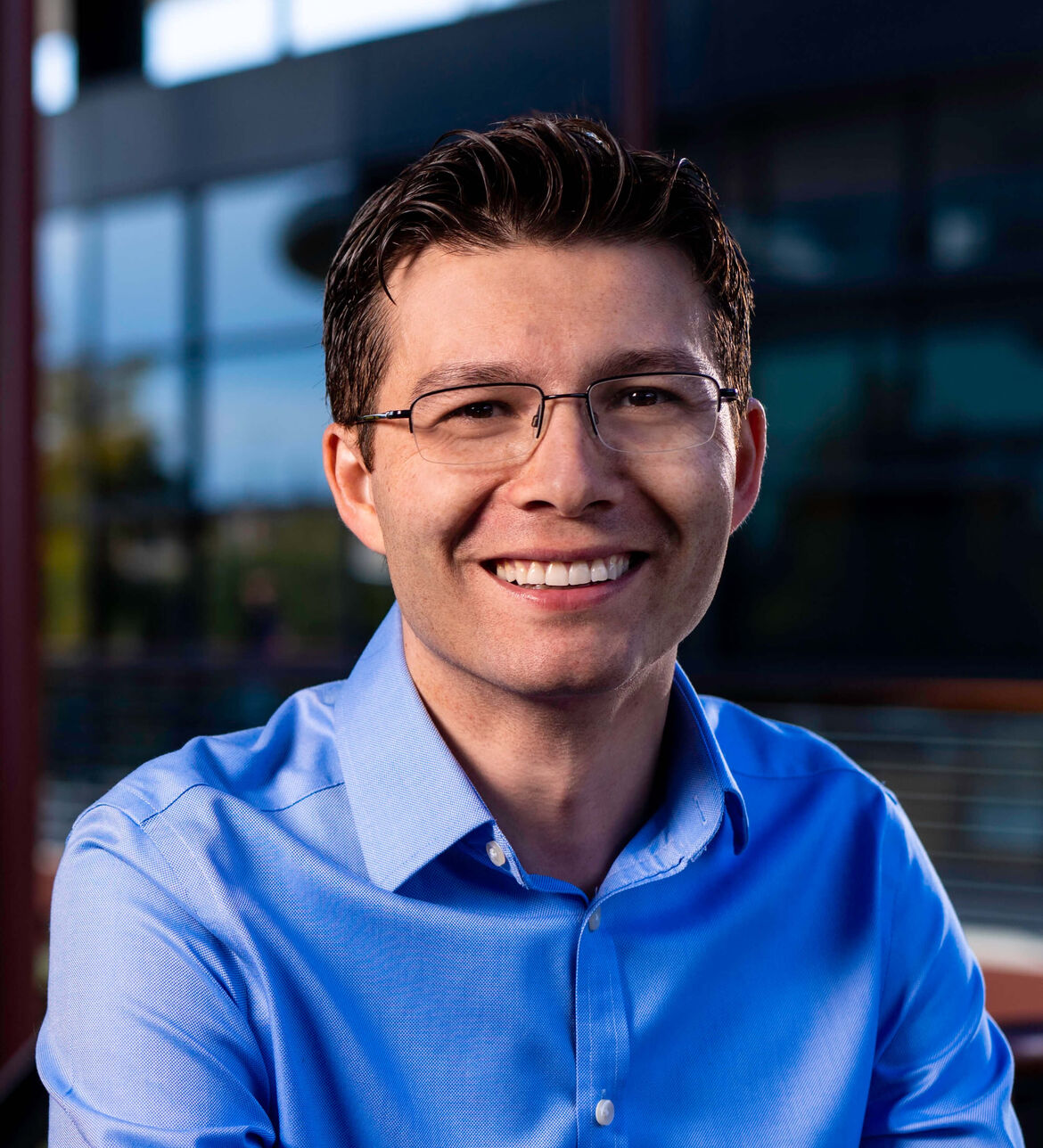
Dear colleagues,
We would like to invite you to a lecture in the Heidelberg Frontiers in Medicine Lecture Series on November 6th, 2025 by
Prof. Sergiu P. Pasca, MD,
Kenneth T. Norris, Jr. Professor of Psychiatry and Behavioral Sciences
Uytengsu Family Director of the Stanford Brain Organogenesis Center
Stanford University
Lecture details:
Date: Thursday, November 6th, 2025,
Venue: BIOQUANT, Seminar Room 41, Ground floor, Im Neuenheimerfeld 267, Heidelberg University
16:30-17:30: talk titled ‘From Stem Cells to Organoids to Assembloids and Towards Building Human Neural Circuits in Living Systems to Develop Therapeutics’
17:30-18:30: Post-lecture reception with the speaker for all attendees (foyer of Bioquant)
All scientists and students are invited. Please use the following link for a quick RSVP of attendance and to indicate whether you are interested in meeting Sergiu Pasca in person:
https://terminplaner4.dfn.de/I4hprTRznuEBJNDu
Registration is not mandatory but would be helpful for planning and organization.
Information on the speaker:
Dr. Sergiu P. Pașca is the Kenneth T. Norris, Jr. Endowed Professor of Psychiatry and Behavioral Sciences at Stanford University and the Bonnie Uytengsu and Family Director of the Stanford Brain Organogenesis Program. He is a faculty member of Stanford Bio-X, the Wu Tsai Neurosciences Institute, and Stanford ChEM-H.
Originally from Romania, Dr. Pașca earned his M.D. from the Iuliu Hațieganu University of Medicine and Pharmacy in Cluj-Napoca before moving to Stanford for postdoctoral training, where he established his independent laboratory. His pioneering work has introduced the concepts of neural spheroids and assembloids—three-dimensional stem cell–derived models that replicate key aspects of human brain development and function. These systems have opened new avenues for understanding the mechanisms of neuropsychiatric disorders and for developing therapeutic strategies.
Dr. Pașca’s scientific contributions have been widely recognized. His honors include the 2024 Eva King Killam Research Award (2024), the Schaller Prize in Neuroscience (2024), the 2024 ISSCR Momentum Award, the IBRO-Kemali International Prize for Research in the Field of Basic and Clinical Neurosciences (2022), and election as a member of the U.S. National Academy of Medicine (2023). He has also been awarded Doctor Honoris Causa by his alma mater and was named a Knight of the Order of Merit of Romania.
Relevant links:
https://profiles.stanford.edu/sergiu-pasca
https://med.stanford.edu/pascalab.html
Key sample publications:
Onesto MM, Amin ND, Pan C, Chen X, Kim JI, Reis N, Kanton S, Valencia AM, Hudacova Z, McQueen JP, Tessier-Lavigne M, Pașca SP. Midline assembloids revealregulators of human axon guidance. Science. 2025 Jul 17;389(6757):282-289. doi: 10.1126/science.adq7934. Epub 2025 Jul 17. PMID: 40674484.
Kim JI, Imaizumi K, Jurjuț O, Kelley KW, Wang D, Thete MV, Hudacova Z, Amin ND, Levy RJ, Scherrer G, Pașca SP. Human assembloid model of the ascending neural sensory pathway. Nature. 2025 Jun;642(8066):143-153. doi: 10.1038/s41586-025-08808-3. Epub 2025 Apr 9. PMID: 40205039; PMCID: PMC12137141.
Chen X, Birey F, Li MY, Revah O, Levy R, Thete MV, Reis N, Kaganovsky K, Onesto M, Sakai N, Hudacova Z, Hao J, Meng X, Nishino S, Huguenard J, Pașca SP. Antisense oligonucleotide therapeutic approach for Timothy syndrome. Nature. 2024 Apr;628(8009):818-825. doi: 10.1038/s41586-024-07310-6. Epub 2024 Apr 24. PMID: 38658687; PMCID: PMC11043036.
Meng X, Yao D, Imaizumi K, Chen X, Kelley KW, Reis N, Thete MV, Arjun McKinney A, Kulkarni S, Panagiotakos G, Bassik MC, Pașca SP. Assembloid CRISPR screens reveal impact of disease genes in human neurodevelopment. Nature. 2023 Oct;622(7982):359-366. doi: 10.1038/s41586-023-06564-w. Epub 2023 Sep 27. PMID: 37758944; PMCID: PMC10567561.
Revah O, Gore F, Kelley KW, Andersen J, Sakai N, Chen X, Li MY, Birey F, Yang X, Saw NL, Baker SW, Amin ND, Kulkarni S, Mudipalli R, Cui B, Nishino S, Grant GA, Knowles JK, Shamloo M, Huguenard JR, Deisseroth K, Pașca SP. Maturation and circuit integration of transplanted human cortical organoids. Nature. 2022Oct;610(7931):319-326. doi: 10.1038/s41586-022-05277-w. Epub 2022 Oct 12. PMID:36224417; PMCID: PMC9556304.
We look forward to your active participation and stimulating discourse.
Best wishes,
Michael Boutros
Prof Dr Huda Zoghbi, Howard Hughes Medical Institute "Rett syndrome and MECP2 disorders from the clinic to the bench and back"
Dear colleagues,
We are pleased to invite you to a lecture of the Heidelberg Frontiers in Medicine Lecture Series, taking place on June 26, 2025, and to be delivered by
Prof. Dr Huda Zoghbi, MD,
Investigator, Howard Hughes Medical Institute
Director, Jan and Dan Duncan Neurological Research Institute
at Texas Children's Hospital
Distinguished Service Professor, Baylor College of Medicine
Lecture details:
Date: Thursday, June 26, 2025,
16:00-17.00: Talk :'Rett syndrome and MECP2 disorders from the clinic to the bench and back'
Venue: Lecture Hall, Marsilius Kolleg, Im Neuenheimer Feld 130.1, 69120 Heidelberg
17.00-18.00: Post-lecture reception with the speaker for all attendees
Venue: Foyer, Marsilius Kolleg, Im Neuenheimer Feld 130.1, 69120 Heidelberg
About the speaker:
Huda Zoghbi is Professor of Pediatrics, Molecular and Human Genetics, Neuroscience and Neurology at Baylor College of Medicine.She has been bestowed with a large number of highly prestigious international awards, including the Breakthrough Prize in Life Science, the Canada Gairdner International Award, the Gruber Prize in Neuroscience, the Kavli Prize in Neuroscience, the Brain Prize, the Shaw Prize in Life Science and Medicine, and many others.
Dr Zoghbi trained in pediatrics and molecular genetics at Baylor College of Medicine. Her primary research interest spans the areas of neurodevelopment and neurodegeneration: Of note is her pioneering discovery that Spinocerebellar ataxia type 1 is caused by polyglutamine expansion.
Her work on toxic protein accumulation provided broader insights into Alzheimer disease and related disorders. She identified key tau regulators that opened up novel therapeutic avenues. In neurodevelopment, she discovered the Math1/Atoh1 gene, which plays a critical role in the development of sensory and respiratory circuits.
Her identification of MECP2 mutations as that of Rett syndrome has paved the way for the development of various genetic and antisense therapies. Dr Zoghbi has been a dedicated mentor to over 110 young scientists. She is a member of numerous boards, including the Board of Trustees at Rockefeller University, the Scientific Advisory Board of the Chan-Zuckerberg Initiative, as well as the Board of Directors of the McKnight Endowment Fund for Neuroscience, to name but a few.
Prof Dr Mathias Lichterfeld, MD PhD, Harvard Medical School - "Recent advances in finding a cure for HIV infection"
Dear colleagues,
We would like to invite you to a lecture in the Heidelberg Frontiers in Medicine Lecture Series on January 15, 2025 by
Prof. Dr Mathias Lichterfeld, MD PhD
Professor of Medicine, Harvard Medical School
Harvard University Center for AIDS Research (CFAR)
Director, CFAR Program in HIV Eradication
Lecture details:
Date and venue: January 15, 2025, Surgery Clinic, Im Neuenheimer Feld 420
16:00-17.00: Talk titled 'Recent advances in finding a cure for HIV infection'
17.00-18.00: Reception with the speaker for all attendees in the foyer
About the speaker:
Prof. Lichterfeld is an expert on infectious diseases with a focus on retroviral infections, particularly HIV-1. His research group explores the mechanisms underlying HIV-1 persistence in the human body using new technologies, such as single-cell profiling of virally-infected cells.
Prof. Lichterfeld also leads clinical trials on HIV eradication and cure, and is a staff physician at Brigham and Women's Hospital (BWH) and MGH at Harvard Medical School. He is a member of the Ragon Institute and an Associate Member of the Broad Institute of MIT and Harvard. Prof. Lichterfeld received his medical degree from Heidelberg University and completed his medical specialisation at the Massachusetts General Hospital.
Prof. Carl-Henrik Heldin, Uppsala University - "Targeting the pro-tumorigenic effects of TGFß in tumour treatment"
Dear colleagues,
The Heidelberg Frontiers in Medicine lecture series, initiated by the Heidelberg Medical Faculty, will host Prof. Carl-Henrik Heldin from the Department of Medical Biochemistry and Microbiology at Uppsala University, Sweden, on 1 and 2 October.
All scientists are cordially invited to attend Prof Heldin's lecture:
Targeting the pro-tumourigenic effect of TGFß in tumour treatment
1 October, 17:00-18:00 in the lecture theatre of the Department of Surgery, Im Neuenheimer Feld 420. The lecture will be followed by a reception in the foyer of the Department of Surgery from 18:00-19:00.
Dear colleagues,
The Heidelberg Frontiers in Medicine Lecture Series launched by the Medical Faculty Heidelberg will be hosting Prof. Carl Henrik Heldin from the Dept. of Medical Biochemistry and Microbiology, Uppsala University, Sweden over October 1 and 2.
All scientists are invited to Prof. Heldin's talk entitled:
'Targeting the pro-tumorigenic effects of TGFß in tumour treatment'
on October 1, 17.00-18.00 in the Lecture Hall of the Surgery Clinic, Im Neuenheimer Feld 420. The talk will be followed by a reception in the foyer of the Surgery Clinic between 18.00-19.00.
Career Development Program
updated: 16/05/2025