Neuroanatomie

Organisation Institute Abteilungen Neuroanatomie

Abteilung Neuroanatomie


Dear all,

In 2025, the Skutella Department in Heidelberg achieved strong scientific output and successful collaboration, particularly in regenerative research.

The department contributed 28 publications (a new record!), publications spanning molecular and cell biology, regenerative medicine, oncology, neurology, and clinical translational science. These publications correspond to an estimated cumulative journal impact of roughly 120–140 points across the year.

Prof. Dr Mike Chan (Biomedical Group, EWB/EWA, Baden R&D Lab) and Prof. Thomas Skutella are collaborating at Heidelberg University on translational regenerative medicine, focusing particularly on precursor stem cells, peptides and exosomes, and their applications in ageing and prevention.  In Heidelberg, our focus has been on characterising these cells, peptides and exosomes, including safety issues. Specific research areas include developing and optimising methods for the precise handling of proteins, stem cells, peptides, and exosomes for regenerative medicine applications. The next step will be to apply regenerative approaches using precursor stem cells/progenitor cells, organ-specific cell extracts, mitochondrial organelles and nano-organo-peptides combined with exosomes. We are also jointly working on a concept for stem cell therapies and ageing. This includes the hypothesis that targeting cellular senescence and using stem cell- and exosome-based interventions could improve damage repair and healthy lifespan. We have established a progeria-model senescence reporter system for in vitro and in vivo analysis. Furthermore, an Alzheimer's disease model is available.


Our collaboration with Prof. Dr Rui Chen in China intensified in 2025 and has extended beyond the development of an inducible transgenic mouse model that overexpresses crucial transcription factors for tendon regeneration. Dr Tao Zhang, Mrs Zihan Xu and Mrs Jiwen Ren are conducting extensive experimental and bioinformatics work on single-cell trajectories, following the programming of key cells after tendon injury, in collaboration with the Chen group in China. The first manuscripts on these complex issues will be submitted this year.
In his own research, Dr Tao Zhang identified a new population of Tnn+ (tenascin) progenitor cells as a source of enthesis fibrocartilage cells. Using spatial transcriptomics, single-cell RNA sequencing, genetic lineage tracing, and functional ablation models, he investigated the role of these cells in tendon-bone integration during development and under mechanical loading. The manuscript is currently undergoing minor revisions for publication in the highly prestigious Bone Research journal, published by the Nature Publishing Group, which has an Impact Factor of 15.

The strategic alliance with Prof. Dr Hossein Azizi has remained a cornerstone of the department’s reproductive biology programme. Co-authored papers on Sertoli cell transcriptomics and spermatogonial stem cell biology employed integrated microarray and bioinformatic approaches to identify candidate genes involved in male infertility and stem cell ageing. This collaborative work spanned fundamental culture systems of spermatogonial stem cells and high-dimensional omics, thereby strengthening the translational pipeline from laboratory research to potential clinical diagnostics in andrology. Mrs Kiana Sojoudi and Mr Emad Reza are doctoral students in this group.

The collaboration with Prof. Dr Alexander Younsi and the neurosurgical team at Heidelberg focused on injury-related neuroinflammation and neuroprotection. Congratulations! Prof. Younsi has been the chief physician of the Department of Neurosurgery at BG Klinik Ludwigshafen since 1 September 2025. He also heads the neurosurgical practice at the Ludwigshafen BG Klinik medical care centre (MVZ). In 2025, joint publications were released on topics such as neural reprogramming and microglia in spinal cord injury. These publications presented these cells as potential therapeutic targets and summarised the existing preclinical evidence for modulating innate immunity following trauma to the central nervous system. By linking anatomical, molecular and clinical perspectives, this collaboration has supported the development of future cell-free and cell-based approaches to spinal cord repair. 
A new publication on the therapeutic effects of IL4 in the context of SCI has recently been accepted for publication in the journal Theranostics (IF 13.3) and will appear in 2026.  Several high-profile publications on reprogramming and the application of genetically engineered neural stem cells in the traumatically injured central nervous system are in the pipeline as part of our ongoing collaboration with the BG Klinik Ludwigshafen.

Last year Dr Longping Yao published a research paper related to the topic of this dissertation in the International Journal of Surgery, which has an impact factor (IF) of 10.1. He also secured a place on the prestigious Medical Scientist Programme at the University of Heidelberg, designed to nurture promising natural scientists and prepare them to become leaders in medical research. The programme is open to postgraduate researchers with exceptional qualifications who wish to apply for a research position at the Medical Faculty. The selection process was competitive. It offers up to 3 years of full-time research, funded by the Medical Faculty for the first 2 years and by the host institution for the final year. Dr Yao also has a new publication in Advances Science (IF 15.1) in the last and rounds of revision and has a new DFG application ready for submission.

Mrs Wenjing Hou is working extensively with a conditional reprogramming model to reverse ageing and rescue a diseased state. Her research is extremely promising. With Dr Yuafeng Zhang she is working on another project with partial reprogramming/regeneration in vivo.

For his doctoral studies, Mr Mohamed Ibrahim is developing neuroregenerative genetic constructs to rebuild axonal networks in an injured adult nervous system.

Mrs Darleen Bug, a doctoral student in our department, conducted excellent research on the ageing hypothalamus and spent most of the Christmas holidays in the behavioural facility.

Mr Weiming Lai presented a poster at the ISSCR in Hong Kong this year and was invited to speak about his research at Exosome Europe in Amsterdam. Entitled 'Reversible Immortalization Facilitates the Large-Scale Production of IL10-Enriched Exosomes for Osteoarthritis Therapy', his presentation was very well received. Weiming is currently finishing his PhD, focusing on exosome-related research. His work explores the biological functions and therapeutic potential of exosomes in disease models, employing an integrated approach that combines molecular biology, proteomics, and regenerative medicine. He has already achieved several research milestones and is currently writing his doctoral dissertation and preparing related publications. In collaboration with Prof. Chan, he is building a small, effective research team with Dr Yang Han, Mr Shaowei Zhou and Mrs Yi Lu in our department.

Mrs Farzaneh Alimerzaloo is working on artificial exosomes, which could be loaded with specific cargo and coated with specific guidance molecules.

Dr Maryam Hatami is building on her previous work on the production and characterisation of Prox1/NeuroD1 neurons.

Mrs Tasneem Halhouli will continue this work and develop a culture model (assembloids) of organoids of the dentate gyrus and cornu ammonis.

Dr Osama Hamadelseed Abdulrahman has started his habilitation in our department and is establishing a research team focusing on Down syndrome and stem cell research.

Dr Xunlei Zhou is actively supporting most of the projects, both in the frontline and in the background.

Prof. Dr Thomas Skutella is working on EVs from RNA-reprogrammed cells of old humans, on tissue derived EVs and on human spermatogonial stem cells.

We would like to thank Ms Roxolana Bahrjanyj and Dr Federico Moretti for their support in administration and laboratory organisation, and Ms Kuheli Dutta, Ms Farzaneh Alimerzaloo, Ms Ursula Hinz and other staff members for their help with various laboratory tasks and for supporting our doctoral students.

I hope that our research will generate new, great ideas for regenerative medicine, enabling us to create and heal cells, tissues, and organs both in vitro and in vivo.

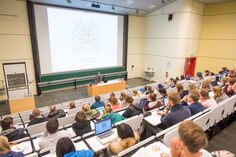
In 2025, the Neuroanatomy department, under the leadership of Prof. Dr Skutella, continued to provide structured, curriculum-integrated teaching within the Heidelberg medical program, combining classical anatomical training with clinically oriented concepts in neurobiology and regenerative medicine. Teaching activities were delivered by a closely collaborating team, including Dr Gonzalo Alvarez-Bolado, Dr Xunlei Zhou, Mrs Darleen Bug and Mr Mohamed Ibrahim, who contributed to main lectures, seminars, and practical courses and helped to ensure continuity, accessibility, and supervision for both undergraduate and doctoral students. While formal student evaluation data for 2025 are not publicly available, the department’s stable teaching portfolio, high research activity, and regular involvement in the HeiCuMed curriculum indicate a solid and positively perceived learning environment that supports concept-oriented understanding of anatomy, histology, neuroanatomy, cell biology, and development, and its translational relevance.

All the best,
Thomas Skutella


Research


DE